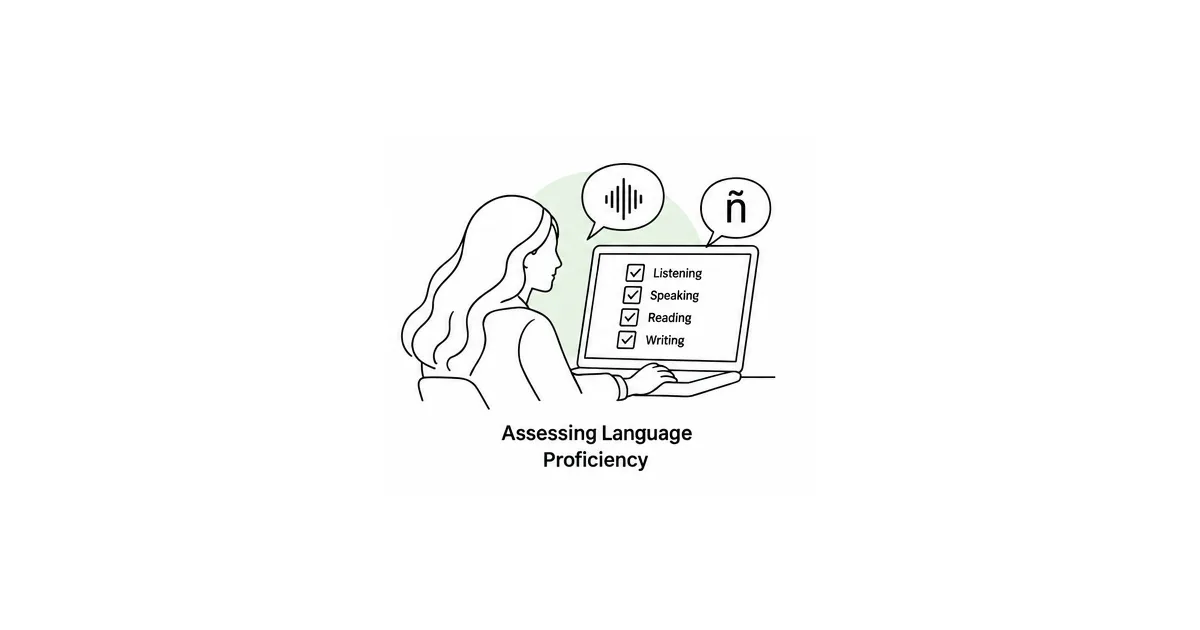
How to Assess Language Proficiency During a Job Interview
Excerpt: Resume claims such as "fluent" or "native speaker" do not always reflect a candidate's ability to communicate professionally. Learn how to assess speaking, writing, listening comprehension, and workplace communication during the interview process.
One of the most common mistakes in multilingual recruitment is assuming that someone who speaks a language socially can also use it effectively in a professional setting.
A candidate might sound confident during a casual conversation but struggle to write a client email, negotiate pricing, explain a technical issue, or handle a sensitive customer complaint in the same language.
For US employers hiring multilingual and multilingual professionals, these differences matter. Miscommunication can affect customer relationships, sales, operational efficiency, and, in some roles, safety or regulatory compliance.
The challenge is knowing how to evaluate language proficiency accurately without relying on guesswork, personal impressions, or unnecessary testing.
The most effective approach is to assess candidates against the communication tasks they will actually perform. By combining structured interview questions with realistic work simulations and consistent scoring criteria, hiring managers can make more informed recruitment decisions.
Here is how to assess language proficiency during a job interview.
1. Assess Speaking Skills Beyond Casual Conversation
A brief conversation in the target language can help establish whether a candidate is comfortable communicating. However, it does not necessarily show whether they can explain complex information, handle objections, or maintain a professional tone under pressure.
Instead of relying on icebreakers, use questions and scenarios that reflect the responsibilities of the role.
Use realistic speaking scenarios
Choose a scenario based on the position you are hiring for.
For sales and account management:
"Imagine I am a potential customer who believes our pricing is too high. How would you explain the value of our service and respond to my concerns in Spanish?"
For customer service:
"A customer is frustrated because their order has been delayed. Explain how you would acknowledge their concerns, clarify the situation, and outline the next steps in the target language."
For technical support:
"A customer cannot resolve a common technical problem. Explain the troubleshooting steps you would recommend, using language the customer can understand."
For recruitment and human resources:
"Imagine a candidate is unsure about the responsibilities of a position. Explain the role, answer their questions, and clarify the next steps in the hiring process."
Give candidates enough context to respond meaningfully. The aim is to evaluate their language skills, not catch them out with unfamiliar scenarios.
What to evaluate
Clarity: Can the candidate communicate ideas clearly and understandably?
Fluency: Can they maintain a conversation without excessive hesitation that interferes with communication?
Adaptability: Can they rephrase an explanation when they cannot immediately recall a particular word?
Professional tone: Can they adjust their language to suit a customer, colleague, manager, or business partner?
Vocabulary: Can they use the terminology relevant to the role?
Do not expect every candidate to speak without pauses or make no grammatical mistakes. The key question is whether their communication is effective for the work they will perform.
2. Assess Writing Skills Through Practical Exercises
Speaking confidently does not automatically mean someone can write well in the same language. Written communication often requires greater precision, particularly when employees are expected to prepare customer emails, reports, proposals, or technical documentation.
Resume descriptions and cover letters are not reliable substitutes for a direct assessment of writing ability. They may have been edited by another person or assisted by writing tools.
For roles that require professional writing, consider a short, job-related exercise during the interview process.
Try a written communication task
The customer response exercise
Provide the candidate with a fictional customer complaint in the target language. Ask them to write a professional response that acknowledges the issue, explains what happens next, and maintains a constructive tone.
The summarization exercise
Give the candidate a short briefing or internal update and ask them to summarize the main points and recommended actions in the target language.
The business email exercise
Ask the candidate to draft an email confirming a meeting, explaining a delay, or clarifying a misunderstanding with a client.
A 10 to 15 minute exercise may be sufficient for a straightforward role. More complex writing responsibilities may require a longer or more specialized assessment.
Tell candidates what is expected and provide the same basic conditions to applicants competing for the same position.
What to evaluate
Accuracy: Does the writing convey the intended meaning without significant errors?
Clarity: Can the reader understand the message on the first read?
Grammar and structure: Are sentences organized well enough to communicate effectively?
Tone and professionalism: Is the wording appropriate for the intended audience?
Task completion: Has the candidate answered the question or addressed the customer's needs?
Do not focus exclusively on perfect grammar. A candidate who communicates a clear, accurate, professional message may be more suitable than someone who writes elegantly but fails to address the actual problem.
3. Evaluate Listening Comprehension
Language proficiency involves understanding other people, not just responding to them. Employees may need to understand different speaking styles, unfamiliar terminology, detailed instructions, and questions asked at a natural conversational pace.
A candidate who speaks confidently but regularly misunderstands important information may struggle in a customer-facing or collaborative role.
Incorporate listening tasks into the interview
Use multi-part questions
Ask a question containing two or three related elements. For example:
"Tell me about a difficult customer issue you handled, explain how you resolved it, and describe what you would do differently next time."
The candidate should demonstrate that they understood the complete question and addressed its key elements.
Ask the candidate to summarize information
Read a short work-related scenario in the target language and ask the candidate to summarize the main points or identify the next steps.
This can help assess comprehension without making the interview feel like an academic language examination.
Use natural workplace dialogue
Where relevant, introduce a realistic conversation involving a customer concern, a change in plans, or a request for clarification. Observe whether the candidate follows the discussion and responds appropriately.
Do not deliberately speak unnaturally fast or use obscure idioms simply to make the exercise harder. The assessment should reflect the communication demands of the job.
What to evaluate
Understanding: Does the candidate grasp the main message and relevant details?
Completeness: Do they respond to all important parts of the question?
Accuracy: Can they accurately summarize instructions or information?
Clarification: Do they ask sensible follow-up questions when something is unclear?
Responsiveness: Can they respond appropriately to the information they have heard?
Asking for clarification is not necessarily a weakness. In professional settings, confirming an important detail can demonstrate good judgment and help prevent misunderstandings.
4. Assess Reading Comprehension When the Role Requires It
Reading is sometimes overlooked during language assessments, even though many multilingual employees need to interpret emails, customer requests, reports, policies, or technical documentation.
If reading in the target language is an important part of the job, include a short exercise.
For example, provide a fictional customer email and ask the candidate to identify the main issue, any deadlines, and the action required. For a more technical position, use a short passage relevant to the work.
Evaluate whether the candidate can identify important information, distinguish key details from background information, and explain what action should follow.
The difficulty of the material should match the role. A customer service representative does not necessarily need the same reading proficiency as a legal professional reviewing complex contractual documents.
5. Use a Consistent Scoring Framework
A structured scoring framework makes it easier to compare candidates fairly and reduces the influence of personal impressions.
Before interviews begin, decide which language skills are essential for the position and how each will be evaluated.
The following example can be adapted to your recruitment process.
ScoreDescription1: LimitedStruggles to understand or communicate information required for the task.2: DevelopingCommunicates basic information but needs frequent clarification or support.3: EffectiveCompletes routine work-related communication with reasonable clarity and accuracy.4: StrongHandles more complex communication confidently, with appropriate vocabulary and tone.5: Highly proficientCommunicates complex information accurately and adapts effectively to different professional situations.
Use the same scoring descriptions for all candidates applying for the same role. Interviewers should record examples that support their ratings rather than relying on an overall impression.
Not every role requires a score of five across every category. For example, a position involving routine customer inquiries may have different requirements from one involving complex negotiations or technical writing.
Set minimum requirements according to the actual job duties, and avoid treating this example as a validated language test or a substitute for a formal proficiency framework.
6. Avoid Common Language Assessment Mistakes
Even a well-intentioned assessment can produce misleading results if interviewers focus on the wrong things.
Mistake 1: Judging accents instead of communication ability
An accent does not automatically indicate limited proficiency. Candidates may speak with regional or non-native accents while communicating clearly and effectively.
Assess intelligibility, accuracy, comprehension, and the ability to complete the required tasks. Do not use accent or similarity to a particular native-speaker variety as a proxy for competence.
Mistake 2: Using an interviewer who cannot adequately assess the language
A hiring manager who speaks only basic conversational Spanish, for example, may not be qualified to evaluate advanced professional Spanish.
Where possible, use an appropriately proficient interviewer with relevant professional knowledge. If internal expertise is unavailable, consider a qualified external assessor or a suitable independent language assessment.
Mistake 3: Applying different standards to different candidates
If one applicant receives a detailed language test while another is assessed through a casual conversation, the results may not be comparable.
Establish the process in advance and use consistent, job-related criteria. Make reasonable accommodations where required by applicable law.
Mistake 4: Confusing fluency with job competence
Strong language skills do not automatically make someone a strong salesperson, accountant, engineer, or customer service representative.
Evaluate language proficiency alongside the other qualifications required for the position. The goal is to find someone who can perform the job, not simply someone who speaks another language well.
Mistake 5: Testing skills the employee will not use
Avoid lengthy or overly complicated language tests when the job requires only occasional, straightforward communication.
Assessments should be proportionate to the responsibilities of the position. Unnecessary requirements can discourage qualified applicants and make recruitment less efficient.
7. Keep Language Testing Fair and Job-Related
US employers should ensure that language requirements and assessments are relevant to the position and applied consistently. Employment decisions based on language, accent, or perceived national origin can raise discrimination concerns under applicable federal, state, and local laws.
Before introducing a language requirement, ask:
Is the language genuinely needed to perform the job?
Which specific tasks require it?
Is the assessment appropriate for those tasks?
Are all candidates being evaluated against consistent criteria?
Are the criteria focused on effective communication rather than personal preferences about accents or speech patterns?
For regulated or safety-sensitive positions, additional professional, licensing, interpretation, or communication requirements may apply.
Employers should consult current guidance from the US Equal Employment Opportunity Commission (EEOC) and qualified employment counsel where appropriate.
Final Thoughts: Assess Language Skills in the Context of the Job
The most reliable way to assess language proficiency during a job interview is to move beyond self-reported resume claims and casual conversation.
Use realistic speaking scenarios, short writing exercises, listening and reading tasks where relevant, and a consistent scoring framework. Focus on whether candidates can communicate accurately and effectively in the situations they will encounter at work.
Remember that language proficiency is only one part of a successful hire. The strongest candidates combine the required communication skills with relevant professional experience, sound judgment, and the ability to contribute to your organization.
Looking to hire multilingual or multilingual talent in the United States?
LingoLava connects US businesses with skilled multilingual professionals across industries and functions. Whether you are hiring Spanish-speaking customer service representatives, Mandarin-speaking sales professionals, or candidates with other language and professional skills, a structured recruitment approach can help you identify the right talent.
Contact LingoLava to discuss your multilingual recruitment needs.