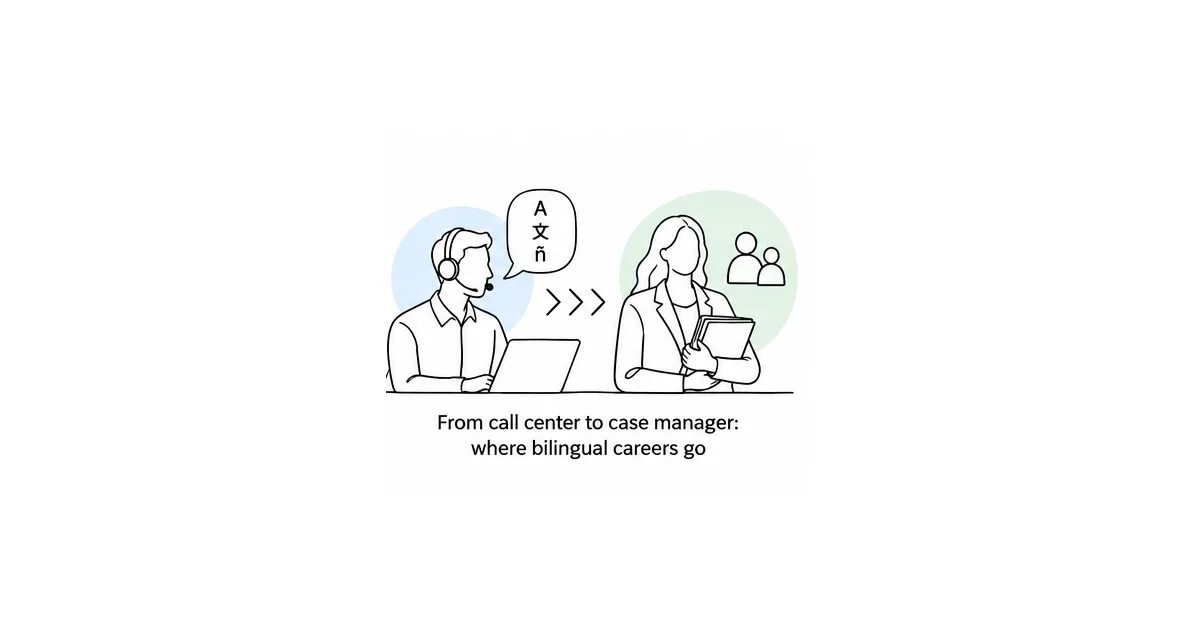
When most people speak two or more languages fluently, their initial entry into the corporate world often happens through a few predictable channels. Customer service, entry-level call centers, or translation support usually sit at the top of the list.
While these roles offer great experience, many multilingual professionals stay in them far longer than they need to. They view their language ability as a specialized utility for answering phones, rather than what it truly is: a foundational leadership skill.
If you are currently handling back-to-back calls in multiple languages, here is a realistic look at where your skill set can actually take you and how to navigate those next steps.
The First Step: The Frontline Professional
Starting in a customer support or call center role is a trial by fire. You are not just translating words. You are managing frustrated callers, navigating complex software systems, and instantly shifting your tone to match cultural expectations.
In this environment, you naturally build three core strengths:
High-stress problem solving under severe time constraints
De-escalation skills across diverse cultural backgrounds
Active listening and rapid data entry
The problem occurs when workers view this as a dead-end routine. In reality, handling hundreds of real-time scenarios in two languages makes you uniquely qualified for high-touch, specialized positions.
Step Two: Moving into Case Management
One of the most natural and rewarding career shifts for multilingual workers is transitioning into case management.
Case managers operate in healthcare, insurance, immigration, legal aid, and social services. Instead of handling 50 brief, transactional calls a day, a case manager takes ownership of a client's entire journey over weeks, months, or even years.
Why are multilingual professionals so successful here?
Building Real Trust: When clients face complex healthcare issues or legal paperwork in a non-native language, they feel vulnerable. A case manager who speaks their language removes that anxiety and builds immediate trust.
Advocacy and Context: You understand the cultural nuances behind what a client says, allowing you to advocate for their specific needs far better than a standard automated service or temporary interpreter ever could.
Cross-Departmental Coordination: Case managers bridge the gap between clients, medical staff, legal teams, and insurance providers. Your ability to communicate clearly across all sides makes you indispensable.
Step Three: Executive and Strategic Roles
Case management is far from the final destination. Once you master project oversight, client care, and cross-cultural communication, several high-value leadership paths open up:
Operations & Program Management: Organizations launching services in new global regions actively look for leaders who understand regional cultures on a granular level.
Corporate Training & Onboarding: Companies regularly promote top multilingual performers to train new cohorts, design multilingual training modules, and build quality assurance standards.
Specialized Account Management: In corporate B2B environments, managing high-value international accounts requires deep rapport and precise technical communication.
How to Make the Transition
If you are looking to take the step out of high-volume calls and into a specialized career track, focus on these actionable steps:
Highlight your outcomes, not your call metrics. Instead of putting "handled 60 calls daily" on your resume, write "resolved complex multi-lingual client issues while maintaining a 98% satisfaction rating."
Seek out cross-departmental projects. Volunteer for pilot programs, translation of internal training guides, or specialized escalations to demonstrate project management potential.
Gain industry certifications. Pair your language skills with a credential in project management (like a CAPM), healthcare navigation, or specialized industry compliance.
Language skills are not just a tool for entry-level work. They are a powerful differentiator that can accelerate your trajectory toward a rewarding, long-term career.